Friday, 20 September 2019

OUT FOR FALL | Balancing Your Ions For A Better Mood

Fall - the time for cozy sweaters, hot tea, and misty mornings. The urge to bundle up inside while it rains and winds is strong this time of year. More than ever though, we need to commit to time outdoors to balance ourselves. 

As we transition into greyer months, we all see a lot less of the sun, and could be in danger of seeing our bright moods fade with the darker days. The sun may hide away for the next few months, but we don't have to. What makes a true West Coaster if not a year-round love for the outdoors, no matter what the weather? Don't let the rain or the chill deter you - it is still really important for us to spend time outside to keep our health balanced and our moods high. 

Whether it's just a hum drum attitude, or something more serious like Seasonal Affective Disorder, there are ways to combat the downer days that can accompany longer dark spells. Did you know that spending time near the water - Ocean, river, or otherwise - can help lift you up? (really, is there anything water can't do?) It goes beyond a cleansing feeling, and takes us back to basic chemistry. We are all made up of atoms, which have a balance of energy inside them made up of positive, negative, + neutral particles. Sometimes, these particles get "traded" back and forth, creating Ions, which have positive or negative balances. We won't get into the chemistry more than that (mostly, because we don't want to make a mistake! It's been a long time since High School Science class), but we can talk a little bit about how those Ions affect us.
Apparently, the way we have constructed our lives means that we have a lot of Positive Ions coming at us from electrical equipment like TVs, computers, cell phones, printers, and other commonly used devices. They have been shown to have a negative affect on our bodies when exposed to them in excess, which by the sounds of it, we are constantly!

"An excess of positively charged ions in your environment can contribute to tiredness and a lack of energy, tension, anxiety and irritability. Positive Ions in the air have even been investigated as a contributing factor for asthma, allergies, migraines and depression." - negativeionizers.net

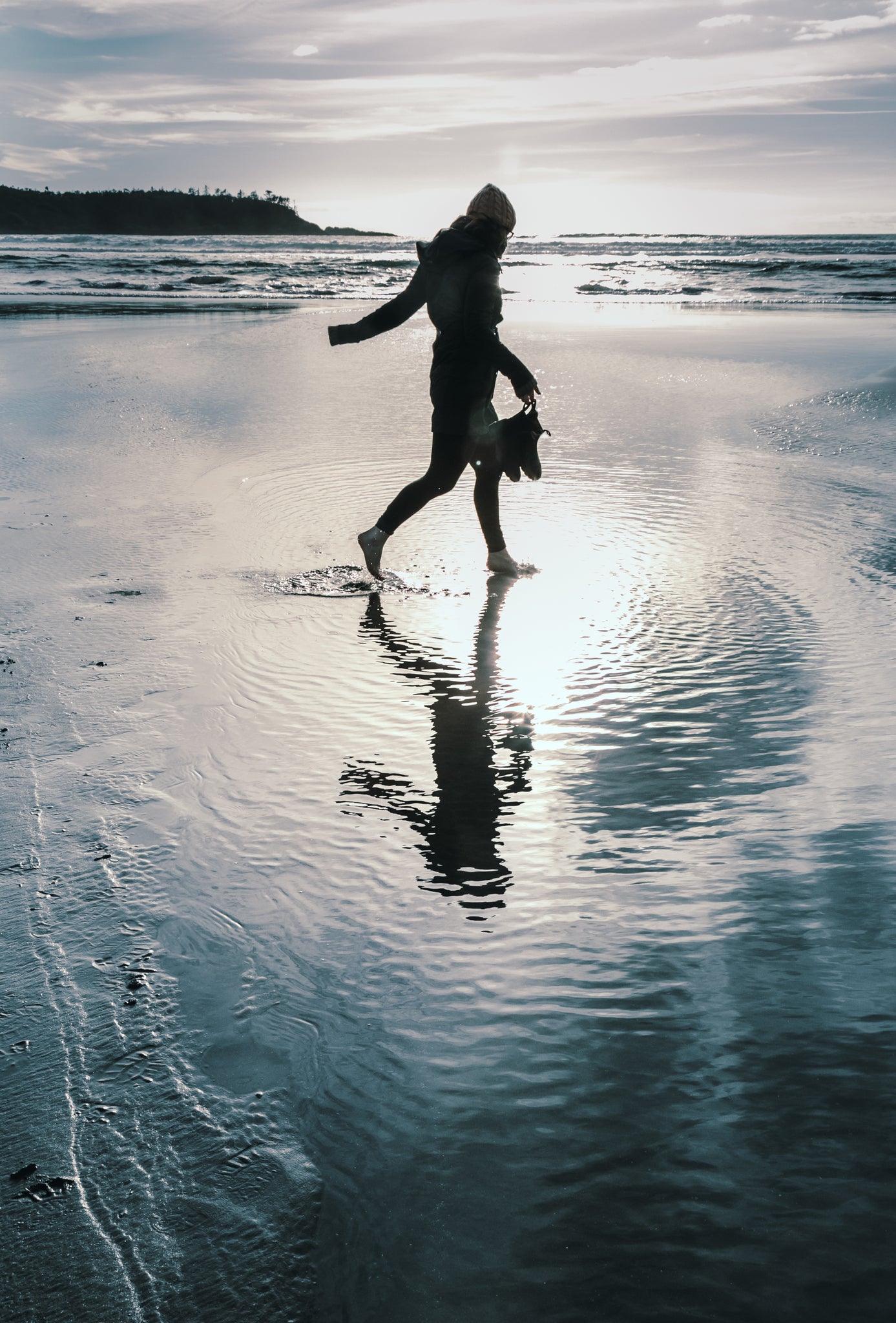
That doesn't sound great, eh? So what's to be done? Find a balance with Negative Ions. Negative Ions occur in great numbers in nature - in forests and moving water, like the Ocean! Cities can be "Positive Ion prisons" with all the electronics and pollutants they contain. Considering that we are beings of this Earth, it should be no surprise that getting back to a natural environment is what is best for us. And apparently this isn't news to us - scientists from eras far before ours have studied the affects of moods from things like waterfalls and storms, where a lot of Negative Ions are produced. These negatively charged atoms have been linked to cleaner air, decreased airborne bacteria, decreased stress, lower blood pressure, better sleep, and improved well-being and mental clarity (among other things). 

So what we're saying, is although you may have to pack away your bikini for the next few months, don't stop scheduling in regular beach visits and forest walks. It's not just the calming rhythm of the waves or misty evergreens that boost our moods, it is air we breath in around these natural places, purified by Negative Ions, that recharge us and bring us new energy. 

Living in coastal communities gives us the advantage to be able to visit the Ocean often. Not everyone is a year round boater, but for those of you who are, we applaud your commitment! You won't want to be out if it's stormy and dangerous, that's what those cozy days are for. If you do have a boat in the water though, do take advantage of calm Fall waters to get out and connect with the healing energy that the Ocean provides us. 

Next time you're feeling a bit low, stroll the beach, walk the trails, follow the river, and let the powers of the outdoors heal you. Make it a goal to do it every week and keep your mood boosted all year long!


from SALT Shop - Journal https://saltshop.ca/blogs/news/out-for-fall

Friday, 30 August 2019

WELL KEPT | Sustainable Shave, Cleaner Beaches

A vision of a man in a black and white movie standing over a wash basin with white foam on his face, and a white towel draped over his shoulder. Carefully, he slides an open blade down his cheek to glide away the stubble + the cream. 

That's a romantic, even sexy image that we've seen again and again in the media over the years. How many sexy shave scenes of women can you think of? Probably not many, or none. The narrative around women's shaving up until the last few years has been one we were meant to keep hidden behind the shower curtain. We were meant to show up smooth and well groomed without razor burn or complaining about ingrowns. And us considering the idea that we could show up unshaved at all? Shocking! Shaving trends have come + gone since the dawn of civilization, and thankfully, we're back to a time when women finally have a choice to shave or not, although it is still arguably steeped in controversy.

If you are in the shave club, you need the proper tools to make it happen. We don't want to be rubbing hair off our skin with pumice stones like they did in ancient times (ouch!).  The unfortunate thing is that since it became the norm for ladies to shave, it also became the norm to use multi-blade disposable razors and heads. These plastic atrocities are now clogging our landfills + Oceans, and they sure aren't going anywhere safe any time soon (Will we never get it right the first time?). What's the best way forward?

Photo Credit: Well Kept

The ladies of well kept found themselves asking this question too. Having shifted their lifestyles to include more sustainable options, Emilie Johnson + Natalie Farrell discovered a void for quality, sustainable products for women's shaving needs, and decided to fill it themselves. They have created a line of lovely, sustainable self-care products that will take the chore out of shaving and make it an enjoyable ritual. 

The company was born out of a genuine need to create beautiful things that help rather than harm the planet, and has grown from there. They started with a wooden handled razor, which has now been replaced with a sturdy brass safety razor that has gained an enthusiastic following. For those new to the safety razor world, the most important thing to know is that it is the last razor you should ever have to buy. The well kept team has provided us with a simple 3-piece safety razor that takes a standard recyclable razor blade. In the long run, it is more cost effective, offers a more precise and closer shave, and is less likely to irritate your skin. And best of all - you're not tossing plastic handles and blades into landfills, ever!

There seems to be a little fear out there about switching to a safety razor - we get that. Most of us have been trained our whole lives to depend on a chunky, plastic guard to cover the multiple blades we've been told we need. A safety razor is called that for a reason - it is still designed with a guard, it just looks different. well kept (and our team here who is loving them!) promises that with a little practice, there is no need to be afraid. Go slow the first few times you use one to get used to it, as it is heavier than a plastic option, and you will be just fine. The well kept ladies have written an excellent "how to" guide to go along with them, which you can find here.  

Photo Credit: Well Kept

To enhance the experience of shaving with a quality razor,  Emilie + Natalie have brought luxurious shave oils, soaking salts + milks, + other beautiful items into their line to accompany their razors, all sourced + produced with the well being of the planet in mind. It helps that everything they make not only makes you feel great, but looks great in your bathroom, right down to the packaging. Surrounding yourself with things that you find aesthetically appealing keeps the mind calm + happy.

As Vancouver based gals, these co-founders spend a lot of time around the Ocean, so naturally their desire to keep the world clean intersects with a passion for the sea. Their hearts break knowing our trash is ending up clogging the homes + bodies of marine life, and showing up on our shores. They committed to their own beach cleaning initiative - #KeepTheBeachWellKept - which for them "...means picking up 5-10 pieces, or more, of garbage that is washing up on our shores every time [they] are at the beach." We love that! The Ocean to them is a way to reset yourself, which anyone who runs a small business knows is a necessity, as often as you can find a moment away from your never ending To Do list.

We love supporting women-led companies, especially those so aligned with our values. We invite you to do your part to #KeepTheBeachWellKept by cleaning up our beaches, and by making the switch from disposable + convenient, to long-lasting + beautiful tools + products for your shaving.

Their razors have done so well in stores we are having trouble keeping them on the shelves! Visit us today to talk to our staff about making the switch to a more sustainable shave life.


from SALT Shop - Journal https://saltshop.ca/blogs/news/well-kept-smooth-shave-cleaner-beaches

Friday, 16 August 2019

SIPPING SEASIDE | Beach Day Mojito

The sun is shining, the sand is hot, and the sound of the waves is lulling you into a peaceful calm. Relaxing days on the beach is what us West Coast mariners live for in the summer.  Our wicker bags, flip flops, and life jackets are always by the door ready to go. We become expert picnic packers. Just add saltwater and sunshine!

What better way to kick back against a driftwood log than with a mojito! With very few ingredients and little prep, you will be on your way to a perfect beach day in no time. Follow along for our go-to (read: made up) recipe that we whipped up on a recent Staff adventure day.

Ingredients

White rum

Lime

Mint

Coconut Sugar

Club Soda

Ice

Tip: Ice might not make it in the cooler on a hot day. Dig a little hole in the sand when you get to the beach + chill your rum + soda in the cool Pacific waters.

We could give you measurements, but who is measuring things on the beach? We're not. Pack whatever pitcher you have in the cupboard, it will probably be close to 2L. Depending on how many people you have with you and how long your afternoon will be, you'll want to pack enough supplies to fill it a time or two.

To start, squeeze a few limes into the bottom of the pitcher. Add in a handful of mint (preferably from someone's backyard), and a few cautious spoonfuls of sugar. You can always add more sweetness later if you like, but you want the drink to keep its fresh zing. Muddle the lime, mint, and sugar together. We used coconut sugar to keep it natural. If you're prepared, you'll have a wooden spoon, or you can source a piece of appropriately sized driftwood! Don't over muddle, or the mint will become mush; just enough to get those flavours mixing.

Pour in about 8-12 oz of rum, and top with soda. If you have ice that hasn't melted yet, throw some in there, and a few rounds of lime. Garnish with fresh fruit like raspberries or pineapple for a fun twist.

Pour into reuseable glasses or jars, and cheers to a great day! We used our re-useable glasses from our SALT candles. You can burn them down to the bottom, clean them out, and use them again and again for all kinds of bevies. Ahhhh, refreshing + sustainable!

Be sure that the last step of any of your beach adventures is packing out what you pack in. Even the biodegradable items like lime rinds need to be tossed into an appropriate spot to keep the beach clean for everyone, including marine life. Responsible beaching means more beaching for everyone!


from SALT Shop - Journal https://saltshop.ca/blogs/news/sipping-seaside-beach-day-mojito

Friday, 2 August 2019

UNDERWATER WORLD | Coolest Marine Creatures in the Pacific Northwest

Who out there dreamed of being an Explorer when they grew up? A Sailor? A Discoverer of New Lands + Species? Maybe a Pirate? Except for maybe that last one, we are right there dreaming along with you. When you become an adult, those dreams can be replaced with real jobs that you can pursue - Geographer, Boat Captain, Oceanographer, Scuba Instructor. Whether it is your full time job, or how you fill your leisure time, you should never stop exploring and being curious about our natural world.

Here in the Pacific Northwest, we are lucky enough to have two worlds to explore - above and below the water. It's no surprise that we are particularly enamoured with the beauty of our underwater ecosystems. Did you know we have some fo the best cold water diving in the world? Jacques Cousteau himself said that British Columbia has “the best temperate water diving in the world, and second only to the Red Sea.” Pretty high praise!

If you grew up right on the Ocean, our local marine life that hangs out on our shores will seem relatively normal to see regularly. Venture out just a little further and there is a jungle of colours and creatures underwater that we bet anyone, from near or far, would be delighted to see up close. Here are a few creatures we get excited to find when we dive under.


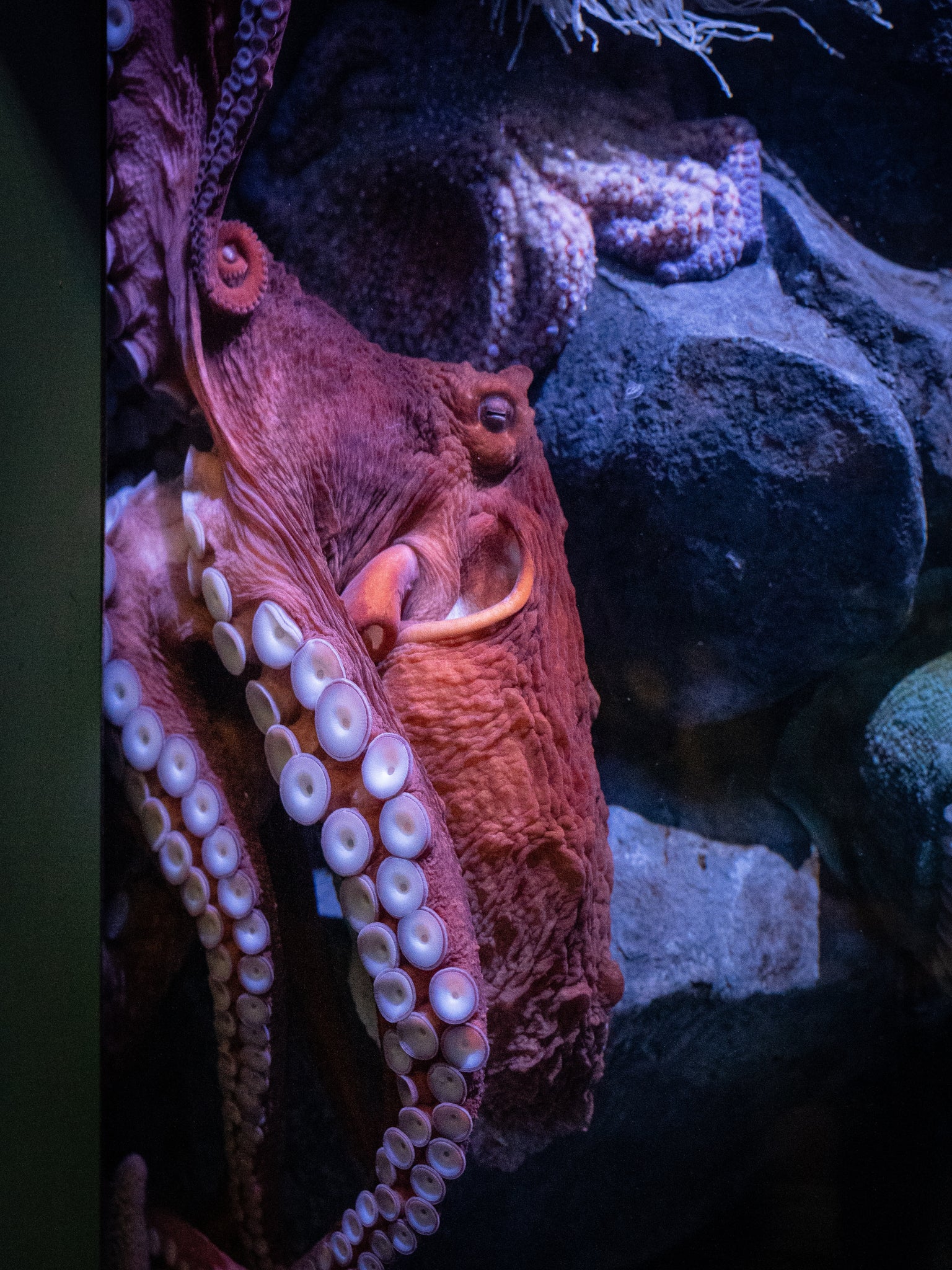
Giant Pacific Octopus

Believe it or not, our coast is home to the largest octopus in all of the oceans! That is pretty awesome. All marine creatures are spectacular, but Octopuses are a special kind of amazing. These are the largest and longest lived of all the species, with an average length of 16 feet and average lifespan of four years. They are generally a reddish brown colour, but they can change colour to blend in with their surroundings. They will die after they breed, with the females living about 6 months to tend to her eggs, a period in which she doesn't eat! Octopus are seriously smart and mischievous creatures. We marvel at them every time we are lucky enough to see one!

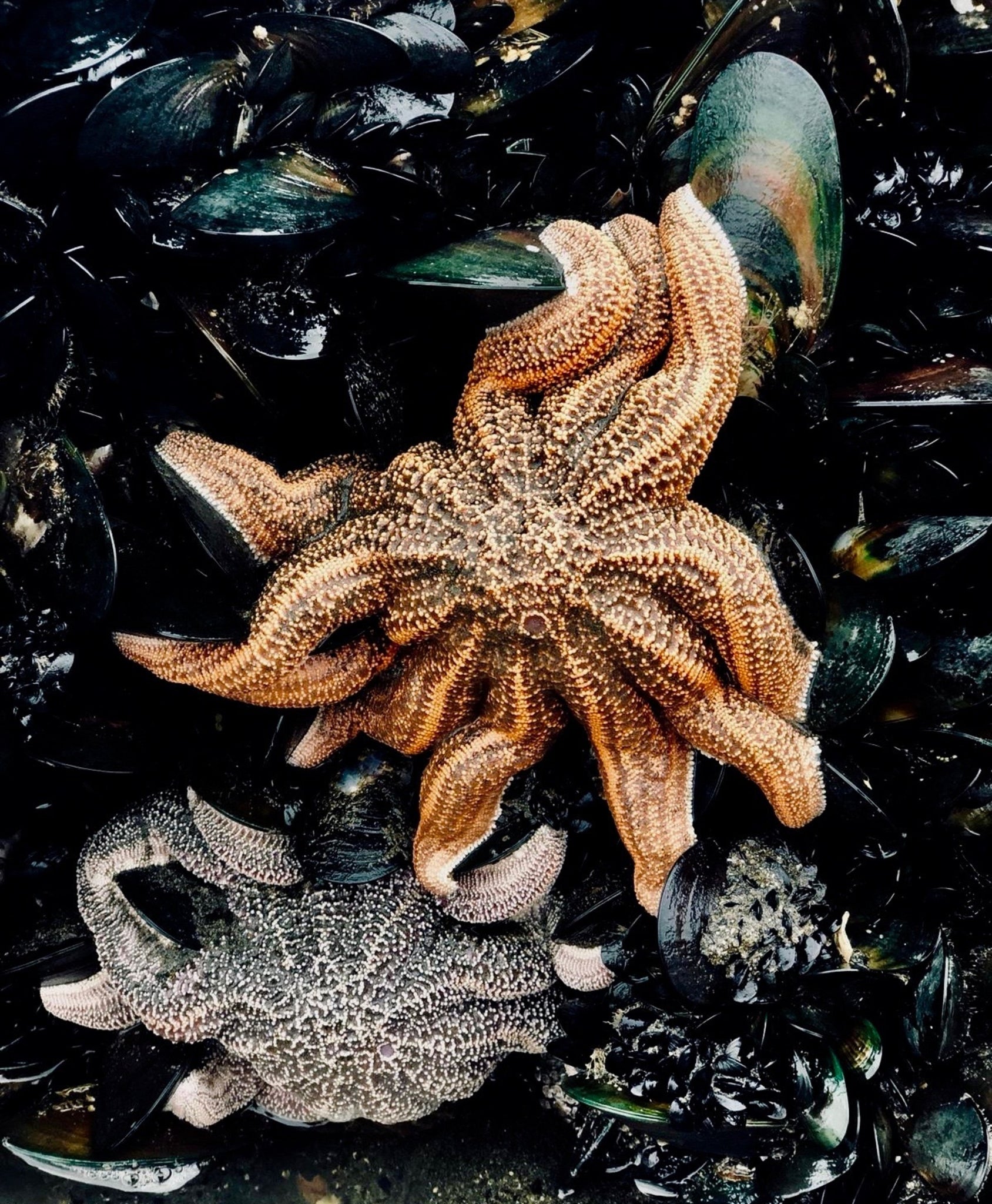
Sunflower Seastar

The purple starfish you will commonly see along our tidal shores is like the small cousin of this seastar. Sunflower seastars usually have 16-24 limbs, which they can shed and re-grow, and can grow up to a metre across! They have thousands of tiny tube feet along the underside of their limbs that allow them to move at one metre/minute, the fastest pace of any seastar in the area. These flowerly looking creatures are actually predators. They will feed on shellfish, sea cucumbers, snails, urchins (their favourite), and more. Their colour varies from bright oranges and reds, to deep purples. You will find them hanging around seaweed beds, hunting and avoiding King Crabs, who like to feed on them.

Wolf Eel

This very long creature is actually a fish, not an eel, despite its name. They can grow up to 6-8 feet, and weigh up to 18 kg. While not the most attractive fish, they are actually very romantic, pairing up in long-term relationships and making homes, or "dens" together in rocky crevices. If they live up to their maximum life span of around 25 years, they may stay with their mates for the better part of two decades.  That's commitment. Their large mouths are designed to get past the spiky exterior of a sea urchin, or break open shellfish and crabs. Although known to be curious enough to approach divers, they should still be given space. 

Photo Credit to eikojonesphotography.com

Rockfish

There are many spiky, spiney fish that fall into the rockfish category, we couldn't pick just one. These fish range in colour from the browns and bieges of their surroundings, to vibrant red, orange, and yellow (Check out a great gallery of the many species here).  Most people seeing them for the first time would rightly assume they might be dangerous to the touch. These fish are characterized by "...dorsal, pelvic and anal fins equipped with very sharp spines that contain a trace of mildly toxic venom." If they keep themselves safe, some of these fish can live up to a couple centuries. Not quite prehistoric, but a good long life!

Photo Credit to Racerocks.ca

Giant Plumose Anemone

Anemones are like living flowers of the underwater world. There are so many amazing varieties the world over. The Plumose Anemone is a tall column, with a fluffy looking tuft of thin, short tentacles, sort of like the head of a cauliflower. They are usually white, but can be brown, tan, or pinkish. When touched or threatened, the tentacles may retract into the column, and shrink down. Don't let that mislead you to think they are shy though. Anemones are carnivores. They will suck small animals in with their tentacles and into the centre of their oral discs to be devoured. Pretty, but deadly to small marine life! 

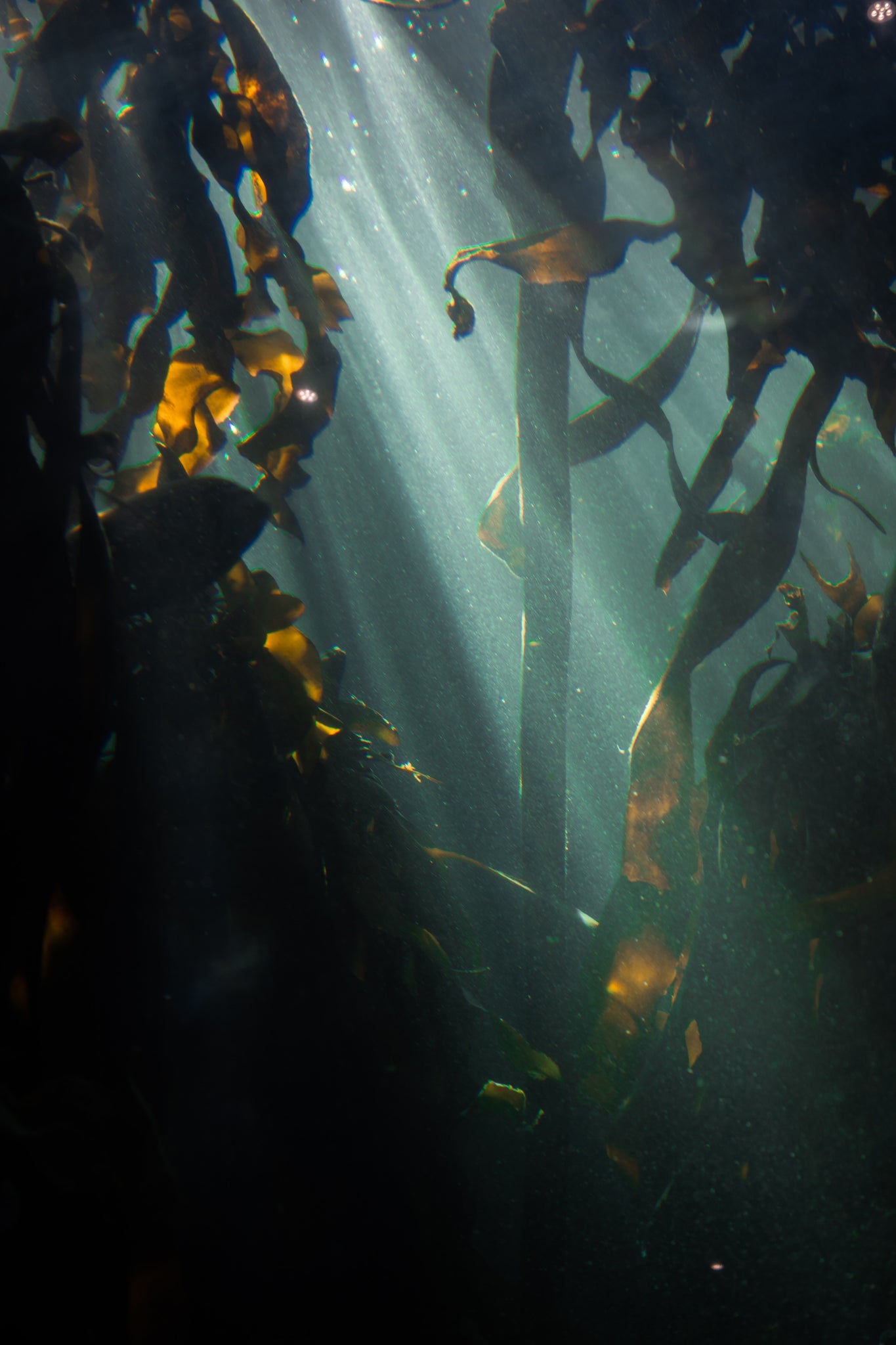
Bull Kelp

We know this isn't a creature, but it sure is home to many, so we think it deserves an honourable mention. This beautiful marine plant grows up to 60 ft tall, and waves its supple blades in the waters like leaves on a tree. It is an annual seaweed, growing from spore to maturity in a year. Fish, crabs, urchins, seastars, otters, and more hide amongst it's stalks for safety and for play. If you grew up on the coast, you might have played jump rope on the beach with long dried tendrils of kelp, or used the head as a make believe bowl. Fun for the whole family! 

This is only a small snap shot of the things that you could discover in our salty seas. We hope that you find a little inspiration in the beauty of these creatures to get out and interact with the Ocean. There is a whole new world down there! And wherever you are, do remember to respect the marine habitat of where you are diving and give creatures the space they need.

If you have never been exploring underwater and are looking to start, head to Frank Whites Dive Store in Victoria for gear, courses, and expert advice on all types of Ocean recreation.

For those of you who are already big into the diving scene, what are your favourite things to see underwater? And if you're willing to share, what are your favourite spots?


from SALT Shop - Journal https://saltshop.ca/blogs/news/underwater-world-strangest-marine-creatures-in-the-pacific-northwest

Friday, 5 July 2019

SUMMER BOATING | Exploring the Pacific West Coast

There is no arguing that summer is the best time to be out on the water. It's calmer, it's warm - everything is sparkling. It's the ideal time to interact with our coasts as often as you can. Whether you are looking forward to a few weeks away in a destination you've planned for months, or you are tossing the lines off the dock on a sunny afternoon and setting off to wherever the tide takes you (we hope you get to do this often!), we encourage you to get out there and celebrate the beauty of our coast. 

We here on the West Coast of Canada are blessed with a ton of small islands to explore. Why not get out there and find some awesome coastal hideaways? There are so many hidden (and some not so hidden) spots to discover and tour. Here are a few of our favourites in the waters nearby the Southern end of Vancouver Island and the Gulf Islands. 

Boat Only

For the mariner who wants to visit those special spots only accessible by the sea, these gems are worth dropping anchor for.

Sidney Spit

Just a few kilometres away from Sidney, BC, this narrow finger of land offers thousands of metres of white sandy beaches to wander along. Perfect for a sunbathe, a picnic, or a long, leisurely ocean-side stroll. Pretty much as close as us cold-water mariners are going to get to tropical in these parts!

Portland Island

Get ready to explore the cliffs and beaches along over 10km of walking trails that traverse this Island. Count how many different trees you can find, and identify which grew naturally, and which are part of gardens planted long ago. Pro Tip: Look for fruit you can forage...we give you our totally unofficial permission. Located between Sidney and Salt Spring Island. 

Russell Island

A good stop for a spot with a little extra history. There are still remnants of the Hawaiian Mahoi natives who originally inhabited the Island in the late 1880s. (We sort of get why they left for hotter climates) Located at the entrance to Fulford Harbour on Salt Spring Island.

Wallace Island

There is something inexplicably sweet & calm about this little place. Make your trip an overnighter and stay in one of the campsites (pit toilets & picnic tables available). There is a small dingy dock to tie up to, and stern tie rings to claim. Located in the Trincomali Channel between Salt Spring and Galiano Islands.


Boat or Car

If you're not sure what your summer plans are yet, or you just prefer the spontaneity of heading off on a weekend, boat or car, to whatever local destination is next on the list, these options give you more travel choices, as they can be reached by boat or car.

Ganges, Salt Spring Island

Our hometown! Ganges is at the heart of the biggest of the Southern Gulf Islands, and is where SALT's first store is located. Whether you're coming by ferry, or by a boat of your own, you'll be able to enjoy wandering through the shops, sitting in our restaurants, & interacting with our eccentric locals. Saturdays are busiest but they treat you to the infamous Saturday Market full of local food and artisanal creations. It's a must attend. We're a little biased, but we think it's a great spot to spend a day or a weekend!

Genoa Bay

A bay of rustic buildings and notable charm, with a restaurant that totes a number of high reviews. A good place to relax, or get out and stretch your legs with a hike. Located on Vancouver Island, near Duncan. 

Gabriola Island

A little further North across from Nanaimo, you'll find this small but thriving community. A stop in here promises parks, beaches, and fresh local cuisine. Rent a bike or a scooter and tour the island beyond the marina!

Along the way to any of these beautiful West Coast spots, there are multiple opportunities to swim, fish, and watch marine life like seals, otters, and if you are extra lucky, dolphins or whales. We have one of the most diverse populations of cold-water marine life living in our waters. Spot a spider crab hanging onto bull kelp, vibrant purple starfish clinging to rocks, or playful sea anemones waving their tentacles in a tidal pool or peeking out from under a dock. All these creatures and the habitats they live in deserve our protection. On your merry travels, take care with your waste, your fuel, and where you plant your feet as you walk. Responsible visitors mean those places you so enjoy discovering stay beautiful for generations to come. 

Stay safe and Bon Voyage! We'll see you on the water! 

Where are your favourite places to come ashore in the summer? We are always looking for our next favourite spot! Seriously, we showed you ours, you show us yours.


from SALT Shop - Journal https://saltshop.ca/blogs/news/summer-boating

Friday, 21 June 2019

SALT & STONE | Skincare to Respect the Sea

A lone surfer waits in the waves. Legs straddling her board, bobbing up and down with the timing of the tides. Hot sun beats down on her freckled shoulders. She is simultaneously at complete, unburdened peace, and in-tune with the cadence of the waves as she watches for her next peak. She is one, she is all, she is home.

There are a lot of things we do that are harming the oceans - we know, we say it a lot. We're not going to make a long, overwhelming list that we can't fathom tackling all at once though, we'd rather focus on one thing we're doing that has a pretty easy fix. We are looking specifically at coral. Coral bleaching is becoming one of the saddest and most obvious affects of ocean changes and pollution. 

"Warmer water temperatures can result in coral bleaching. When water is too warm, corals will expel the algae (zooxanthellae) living in their tissues causing the coral to turn completely white. This is called coral bleaching. When a coral bleaches, it is not dead. Corals can survive a bleaching event, but they are under more stress and are subject to mortality." - NOAA

Top contributors are changes in the ocean's temperature, overexposure to sunlight, extreme low tides, and chemical pollution. Now, there is no easy fix for most of these factors, but we can at least be more responsible in our behaviour when we are entering the water. We might not think about it, but wearing toxic chemicals into the ocean in the form of sunscreens, lotions, and deodorants is damaging to our marine ecosystems. 

"When you swim with sunscreen on, chemicals like oxybenzone can seep into the water, where they’re absorbed by corals. These substances can disrupt coral’s reproduction and growth cycles, ultimately leading to bleaching. 

Even if you don’t go swimming after applying sunscreen, it can still go down drains when you shower. Aerosol can often spray large amounts of sunscreen onto sand, where it gets washed into our oceans. Each year, about 14,000 tons of sunscreen end up in our oceans." - National Geographic 

We still need to protect ourselves from damaging rays, and keep our sweat down. The clear choice is to opt for products making an effort to eliminate the kinds of ingredients that are harmful to the ocean, and to our bodies. It really seems pretty obvious, right?

As part of our mission to protect the ocean, we are stocking up on sunscreen, deodorant, and lip balm from Salt & Stone, "...a natural unisex skin care brand based out of Los Angeles, California, with a strong focus on natural, organic, and antioxidant rich ingredients." 

Salt & Stone was founded in 2017 by Nima Jalali. Having spent the better part of his twenties traveling the world as a professional snowboarder, Nima knew what kind of products people who love interacting with the outdoors needed, but he wanted to do it better than the status quo. He was inspired to create organic, natural products that work just as well as (or better than) the common chemical laden options. Nima feels it is our duty and responsibility as global citizens to look after our Earth, and create biodegradable products that will reduce our footprint. We agree!

Salt & Stone currently offers sunscreens, a deodorant, lip balms, and moisturizing oils to care for our skin that we can safely wear into the ocean and wash down our drains. Sunscreen has become a heated topic lately, as our reefs degrade further and further. Salt & Stone's options are formulated using Non-Nano Zinc Oxide. The "Non-Nano" part is important for a few reasons: 1) It means it will sit on top of your skin and reflect UVA + UVB rays, not enter your bloodstream like a chemical sunscreen, so it is safer for us. 2) In order for mineral sunscreens to leave corals untouched, the ingredient particles must be above 100 nanometers in size so that they cannot be ingested by corals. So non-nano is also safer for the marine environment.

Recently, Hawaii has become the first state to introduce a bill banning all sunscreens that contain oxybenzone and octinoxate, chemicals known to be harmful to coral. There have bee a few other places in the world to make similar moves, but as Hawaii is such a popular destination and has a huge surfing community, we are hoping that their bold stance will bring global attention to this issue. Mahalo!


We are excited to have Salt & Stone deodorant in stores for the first time (it smells so good!). It is already one of our most popular items ever! Nima describes this formula as "an extra strength formula for those who are very active." Salt & Stone has spent over 2 years developing the formula and truly believe they have created the most effective natural deodorant ever made. Being that Nima's favourite thing about the ocean is that it creates surf to ride, we figure he has tested the effectiveness of his products first hand many times.

As a serious athlete, we know that Nima needs to have functional products, and we rejoice in the fact that he has taken the natural route to develop them and create a company that believes in his mission.

"We care about using safe and clean ingredients that we ourselves use every day. We use organic ingredients whenever possible so we can support organic farming and avoid the use of all synthetic chemicals which are used in non-organic farming. 

We research and develop formulas with ingredients grown ethically and sustainably without the use of pesticides, artificial fragrances, sulfates, silicones, petrochemicals, parabens, phthalates or GMO’s. All of our packaging is recyclable and made from post consumer recycled materials."

Salt & Stone thinks about every step of the product life cycle, and is always striving for a smaller carbon footprint as they work to expand their SPF and deodorant range in the years to come. We are stoked to have discovered them now, and we can't wait to see how they develop in the future.

With our population growing, and our climate changing, the demand for skin care products is only getting higher. We hope that with a combination of passionate, responsible entrepreneurs like Nima, and progress in our legislation, that we will see brands like Salt & Stone become the new normal.  

So many humans on this planet value our oceans. And yet, there is too much disconnect between our every day actions, and the impact they have on our blue waters. For those of us who live near the sea, we see every day the beauty, utility, and awe-inspiring complexity that the oceans provide us and its ecosystems, but not everyone has those consistent reminders. We have to have the conversations that educate people so they can make the right choices, and support companies who are making conscious production decisions. 

Find Salt & Stone products in-stores or online to be ready for a summer of responsible ocean adventure!


from SALT Shop - Journal https://saltshop.ca/blogs/news/salt-stone

Friday, 7 June 2019

ORCAS | Preserving Nature, Preserving Families

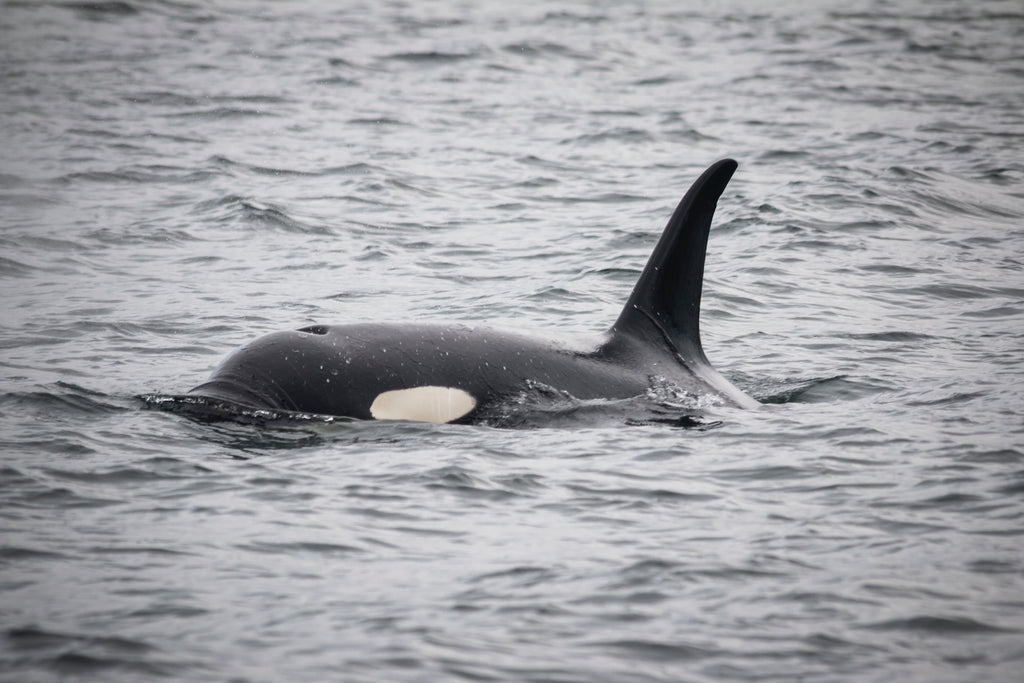
When you think about marine life in the Pacific Northwest, it is unlikely that Orcas won't come up. They have become an icon of our waters. One of the biggest, and most striking animals that represents our stretch of sea, their black and white colouring makes them unmistakable. Although they can be found in other oceans in the world, we do have a relatively high concentration of them residing along the West Coast of North America. They can be even more densely found in the Antarctic, and seem to be able to acclimatize to almost any water temperature. They usually prefer a coastal habitat as opposed to open ocean, although some of the transient pods can be found nearly anywhere from time to time.

Did you know that they are actually dolphins? Or part of the Oceanic Dolphin family more specifically. They are the largest species in the category, weighing up to 10 tonnes and measuring up to 30 feet. There are several biological features that qualify a species into this category. Notable are their fins and their body shapes.

"Oceanic dolphins have a torpedo-shaped body with an inflexible neck,...and a bulbous head. A dolphin skull has small eye orbits,...and eyes placed on the sides of its head. [They] have two flippers on the underside toward the head, a dorsal fin, and a tail fin." -Wikipedia

They are all carnivorous, and can have up to 200 large teeth. Orcas consume other small marine mammals like seals, in addition to fish and squid. They have advanced group hunting techniques, which are really quite remarkable to behold (take a peek here!). Pods from different areas, transient versus resident pods, and the different categories of Orcas within the species will vary in their communication and hunting techniques. Regardless, it would seem that all their methods involve working together. Like many marine mammals, "orcas use echolocation - bouncing sound off of objects to determine their location - to hunt and use a series of high-pitched clicks to stun prey."- defenders.org

Orcas are very intelligent, social animals. They play, they talk, they have familial bonds. There are three broad categories of Orcas: Resident (stick close to shore), Transient (migratory), and Offshore (open ocean dwelling). They travel in pods, which are their families, anywhere from 5-30 on average, although there is no limit to their numbers, save that of their struggle with existence. 

What if, they all disappeared? 

That question makes your heart beat a little faster, doesn't it? What was the first thing that came to mind? Probably questions like "What is threatening them?" "How many are left?" and hopefully, "What can we do to preserve them?" We'd like the answers to those questions too, so we don't have to watch these amazing mammals fade into history.

Currently, there seems to be a lack of data to tells us the exact status of their global population.

"[Their] global distribution and the confusing relationships between populations/potential new species...contribute to scientists not believing that they have enough data to determine the conservation status of the killer whale. Further study and continued monitoring are both necessary to understand any potential risks that this species faces." - oceana.org

However, it is undeniable that they are a threatened, even endangered species. According to this recently released video, the population of the southern resident whales around British Columbia, Washington, and Oregon is at a 30 year low, with only 74 whales accounted for (although a new calf was spotted recently, which is so exciting!). These whales feed mostly on chinook salmon, a species whose numbers are also in decline due to several factors, with climate change heralded as the leader. Other factors in the decline of the Killer Whale population are likely "...increased noise and overcrowding from boat traffic, and an influx of toxic chemicals in their aquatic ecosystem." - oceana.org Orcas are very sensitive to sound, and it is their main source of communication with each other and their environment. If utilizing sound is your main source of finding food and communicating with your pod, having your environment buzzing with loud boat motors is certain to disrupt these processes.

Reproduction is also a challenge. Mothers give birth only every three to ten years, after a 17-month pregnancy. They give birth to one baby at a time, which may nurse for up to two years. That is a long gestation period, which does not leave time for quick procreation of a species. Their young also have only a 50% survival rate, which is a heartbreakingly low number.

Rising water temperatures, increased toxins in their environment and food sources,  lack of food, impending pipelines, captivity, out-right murder - it's not a hard guess as to why the lives of these beautiful creatures are threatened. 

As with many species, marine or otherwise, the Orca's relationship with humans and our behaviour has not been entirely positive. Aside from the byproducts of our way of life messing up their home, we made it a common activity to kidnap them for several decades. Our practice of detaining them for entertainment has been under serious scrutiny over the last several years. As any Free Willy loving moviegoer can attest to (does the trailer make you tear up still too?), the idea of a whale being taken from it's family and placed in captivity where it's living quarters, socialization, and food are all inadequate, seems ludicrous. The documentary Blackfish shows the serious dangers of having killer whales in captivity, both to the whales themselves and to humans. 

In the wild, Orcas have a natural average life expectancy of 30-50 years. In good health and a good environment, they could even live for 80-100 years. "The average age of death for orcas who have died at SeaWorld is 14 years old." -seaworldofhurt.com Whales in captivity are lonely, depressed, and can even resort to self-harm. They experience very real emotions, and with this evidence you could argue that their mental health affects their life expectancy and ability to reproduce. As of September 2018, there are still 61 orcas being held in captivity (us.whales.org) Hopefully someday, we will see that number fall to zero, and their numbers in the wild increase.

So how can we assist in their preservation? Living more responsible lives, being kind to the ocean, encouraging everyone to do the same - all small steps in the right direction. As it is becoming (or always has been) ever so common, the fight to protect anything on Earth comes down to politics. Lobby for better laws, and better protection. Vote against initiatives that threaten their habitats. Being vocal about wanting them to be safe as much as you can is always going to be a help!

Recently, our Owner & Designer Jessica connected with the Saturna Island Marine Research & Education Society (SIMRES) and was named an Action Ambassador.  We look forward to the launch of their Top Actions You Can Take to Help The Southern Resident Killer Whales outreach project. We are excited to work with this excellent local organization to help bring more awareness to the needs of these amazing creatures.

In coastal First Nations cultures, the orca is highly respected for its power and intelligence. They symbolize "...family, romance, longevity, harmony, travel, community and protection." - spiritsofthewestcoast.com After witnessing them, no one can deny that they are magical creatures well-worth protecting. 


from SALT Shop - Journal https://saltshop.ca/blogs/news/killer-whales